In October 2025, Vajra Chandrasekera, an author I revere, wrote a blog post in which he announced, with the wit, intelligence and poetic touch he has accustomed us to, that he had been diagnosed with a thyroid cancer. Which chancer is so “eminently treatable” that he should almost feel “lucky”. It is “replete with optimisms”.
I wasn’t given my initial diagnosis with such optimism. If, after a full year, I am in turn writing this post, beyond its cathartic nature, it is in the hope that someone reads it and finds themself slightly reassured, or maybe soothed, regarding their situation or that of a relative. I am now out of the woods, as much as possible, but no two patients are the same. If these few words can represent a small haven in the storm in which such news will throw you, then I will have achieved my goal.
On Friday, 12 December 2025, I thought I was going for a quick check for a bad ear infection that was outstaying its welcome, and which would have explained the swollen lymph node on the right side of my neck. I was diagnosed with Hodgkin’s lymphoma. Suddenly, the haematologist’s voice became somber, all sound seemed very remote. In a muffled voice, she affirmed it was an illness targeting the lymphatic system; I would have to undergo chemotherapy and radiotherapy, it was quite curable, my odds were good. Odds is a word I rather associate to horse racing, a field in which positive results are seldom given.
I don’t think she said the word “cancer” during that first appointment. No need. My imagination filled in the gaps: I saw myself invaded by foreign and mutated bodies, and going to an Alien-themed escape game right after the diagnosis probably didn’t help. It took two weeks and many more checks (blood tests, scans, etc.) before I was told that cancerous cells were all focused in one place, and that everything was relatively under control.
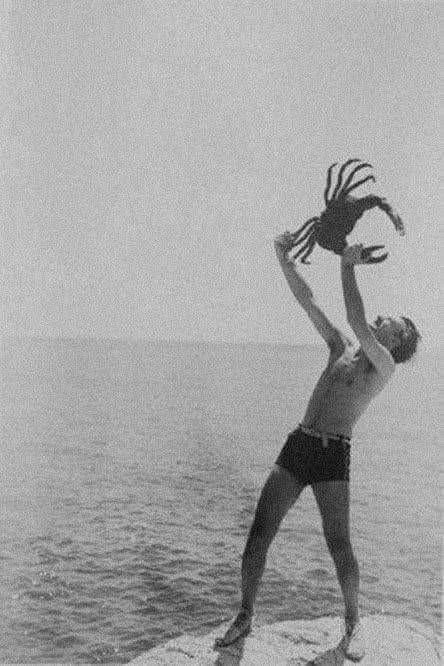
Dali holding a crab at the beach, 1950.
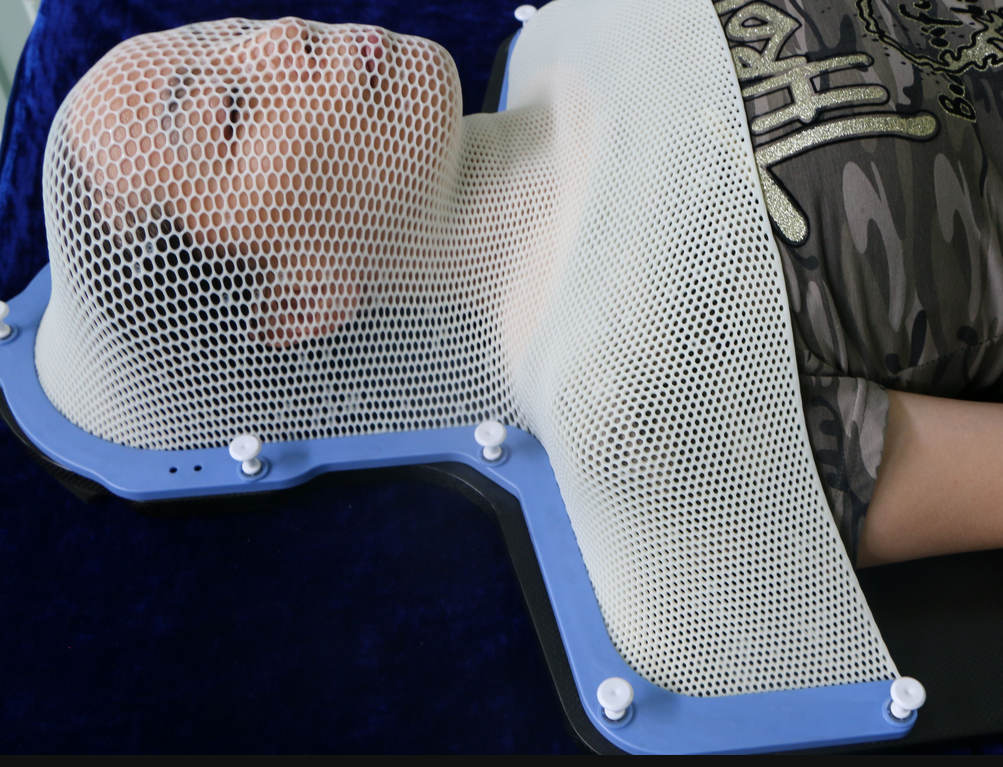
Four months of treatment followed: three months of chemo from January to March, then radiotherapy in April. I would like to unpack these terrifying words, to hopefully make them slightly less alarming. In my case, chemotherapy meant 5-6-hour-long sessions at the hospital during which I was injected four different chemicals aiming at destroying cancerous cells. Given the toxicity of these chemicals, they would rapidly destroy the veins of my arms, so they were instead injected in a small box (a PAC) I was implanted below the collarbone (a quick and painless operation), that box being directly linked to the heart, which is way more able to withstand the chemicals. (Besides, since chemo destroys your immune system, I spent these three months tucked away at home.) As for radiotherapy, it constituted the finishing touches: they irradiate the area in which the canceours cells were clustered so as to make sure there are none left. In practice, it meant going every day to another (thankfully close by) hospital, for four weeks, for irradiation sessions that lasted around fifteen minutes. To make sure only the target area is irradiated, they keep you still with a silicon mesh that is molded directly on your face. Being a tad claustrophobic, I was anxious about the whole process, but it goes by quite fast. And that was it: by May, the warm days were coming back, and with them my health.
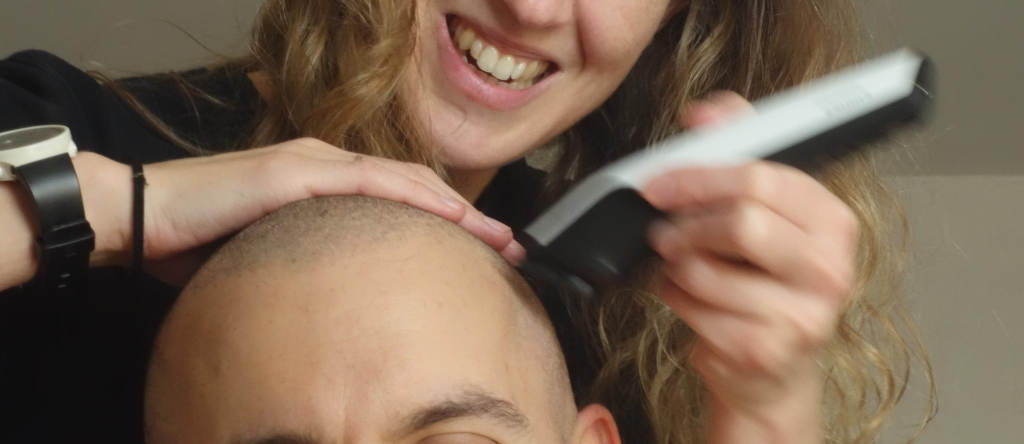
It wouldn’t be honest of me to stop there. All such narratives can’t gloss over the side effects of the treatment, and those of the medicime supposed to limit then. During my weeks of chemo, I thus suffered mucositis (an inflammation of the mucous bits of the mouth), stomach trouble, nausea, extreme fatigue and panic attacks (and, of course, the loss of my hair and beard). Radiotherapy was comparatively way easier, but it still caused me around a month of ageusia and xerostomia, two very fancy words meaning that my mouth was extremely dry and I had lost the sense of taste. None of this was a walk in the park, and far be it from me to play down the anxiety I felt (and that sometimes still haunts me). Nevertheless, I would like to continue on a more positive note because, as frightening as this illness was, I didn’t fight it alone.
First, because of the medical profession, which I want to thank profusedly. All the people I had to deal with were competent and considerate, they worked fast and did everything they could so I had all the necessary information on what I was undergoing and how to fight it. Special thanks to the nurses of the hôpital Saint-Antoine who, despite insufficient compensation and deplorable working conditions (for which they are currently protesting in the streets), were immensely helpful when I was at my lowest. A word also for the doctors who were on call 24/7 and knew how to calm me down when panic attacks made me feel I couldn’t breathe anymore. I could have avoided some of those if I had done a more thorough reading to the information leaflets I was given early in the treatment, but fear and reading comprehension don’t mix too well.
Second, because of my friends and family. Although they couldn’t always be there in the flesh (my lack of an immune system preventing me from meeting anybody), they knew how to make themselves present and they’ve given me an incredible strength. Several times, I was told how courageous I was to have one through such an ordeal, but I feel differently: supported as I was, I only had to go on existing, buoyed all along by a thousand small attentions. If all this has taught me one lesson, it is that in those situations, people reveal their best self and will surprise you.
Finally, if I didn’t fight it alone, it’s most of all thanks to my wife (I will never get used to calling you this way), who was here at every moment, in health, but above all in sickness. During the days when I wasn’t courageous, when the sharp knowledge of my own mortality got the best of me, when I wasn’t sure I would make it to the end. A thousand thanks, Clémence. I probably wouldn’t be here without you.
In a counter-intuitive fahsion, I would like to conclude by saying I feel incredibly lucky. To be alive. To have received such amazing support. But also to have been diagnosed with a relatively benign form of cancer, which remained benign because it was spotted early by an eagle-eyed substitude doctor, cancer which was treated at no expense on my part. Suffering from an “Affection Longue Durée” (=a long-term illness), I didn’t pay for any medicine, any appointment, nothing. These moments remind you of the national treasure that is our Sécurité sociale. We have to fight for it against all the right-wing government that would love sell for parts to the highest bidder that which the people fought for and won. After all this, I am more than ever convinced that health is a human right, and that everyone should be able to enjoy it without fearing for their financial situation. In a wealthy country like France, we certainly have more than enough to fund the Sécu, and to extend its coverage.
Of course, what happened has marked me. For life, probably. The trauma it constitutes lives in me, and I’m learning to live with it; writing this post is part of the process. But feeling I have had a brush with death has created in me a fragility that is, paradoxically, a form of strength. I feel more porous, I feel like I see the world and those that surround me more clearly, I feel like I understand myself better. This is a better gift than any superpowers radiations could have given me.
And, as Vajra said in the conclusion of his blog post, I have so much left to do. I am extremely thankful for all this love, and for the fire it has rekindled in me.
So let’s go back at it, one day at a time.